
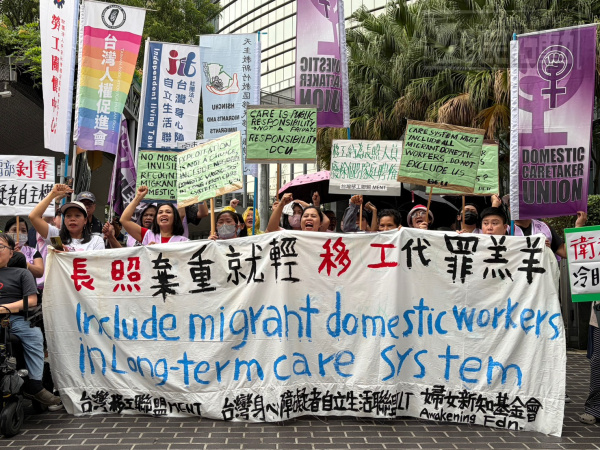
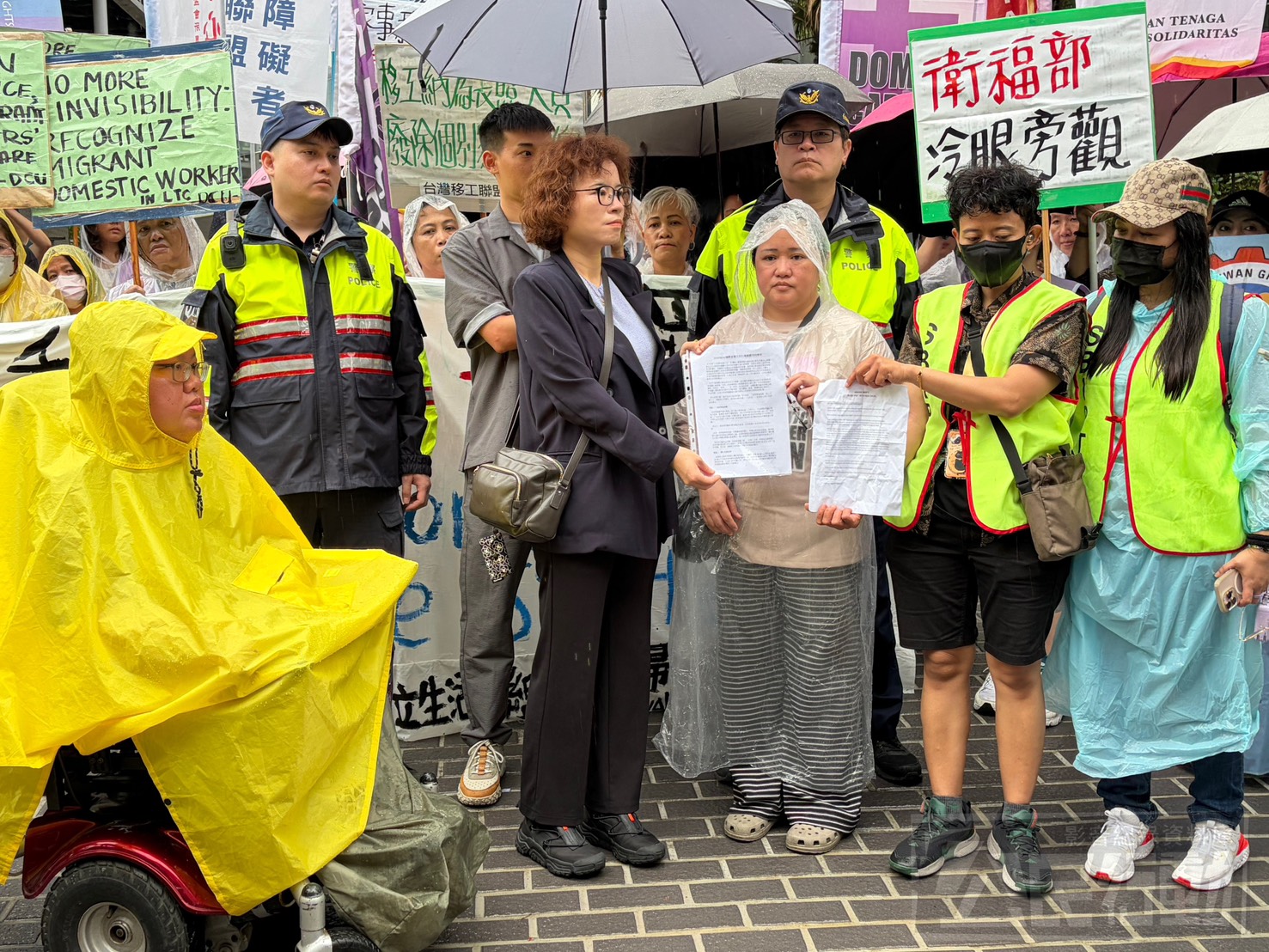
June 16 marks International Domestic Workers Day. On June 14, Migrants Empowerment Network in Taiwan (MENT), Awakening Foundation, and the Taiwan Federation for Independent Living of People with Disabilities gathered at the Ministry of Health and Welfare (MOHW) to stage a protest. Civic groups criticized the ministry for its long-standing failure to provide sufficient, accessible, and diverse public long-term care services. As a result, the burden of care has been shifted onto individual families and domestic migrant workers, leading to poor labor protections for workers and social tensions between families and caregivers.
The groups jointly called on the MOHW to incorporate domestic migrant care workers into the long-term care system. They proposed that care institutions, rather than individual households, should employ these workers and dispatch them as mobile caregivers. This would ensure adequate care services for all families while safeguarding workers’ labor rights and meeting the needs of the elderly and people with disabilities.
Care Burden Unfairly Tied to Workers and Care Recipients
MENT member Wu Jing-ru noted that although Taiwan’s long-term care policies have evolved over nearly two decades—from version 1.0 to the upcoming 3.0—many families with severely disabled members still face barriers to accessing services. As a result, care responsibilities have long been borne by individual households employing migrant caregivers.
Wu pointed out that domestic migrant workers in Taiwan lack full labor law protections and are often denied rest days. They are effectively on call 24 hours a day and frequently earn below the minimum wage. When workers request rest days, sick leave, or legally mandated conditions, families often have no public care resources to rely on. This makes migrant workers scapegoats for the systemic shortage of long-term care services.
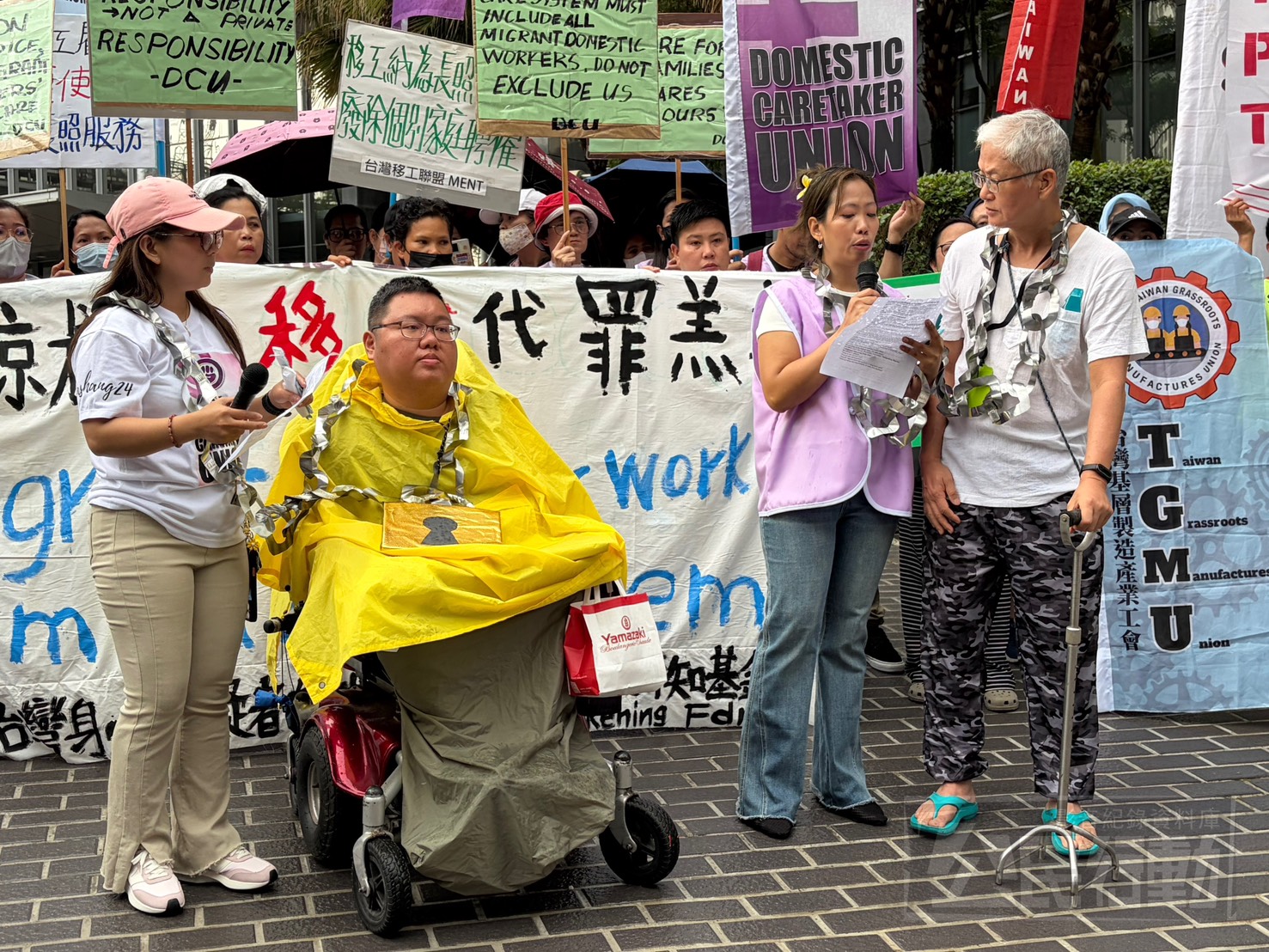
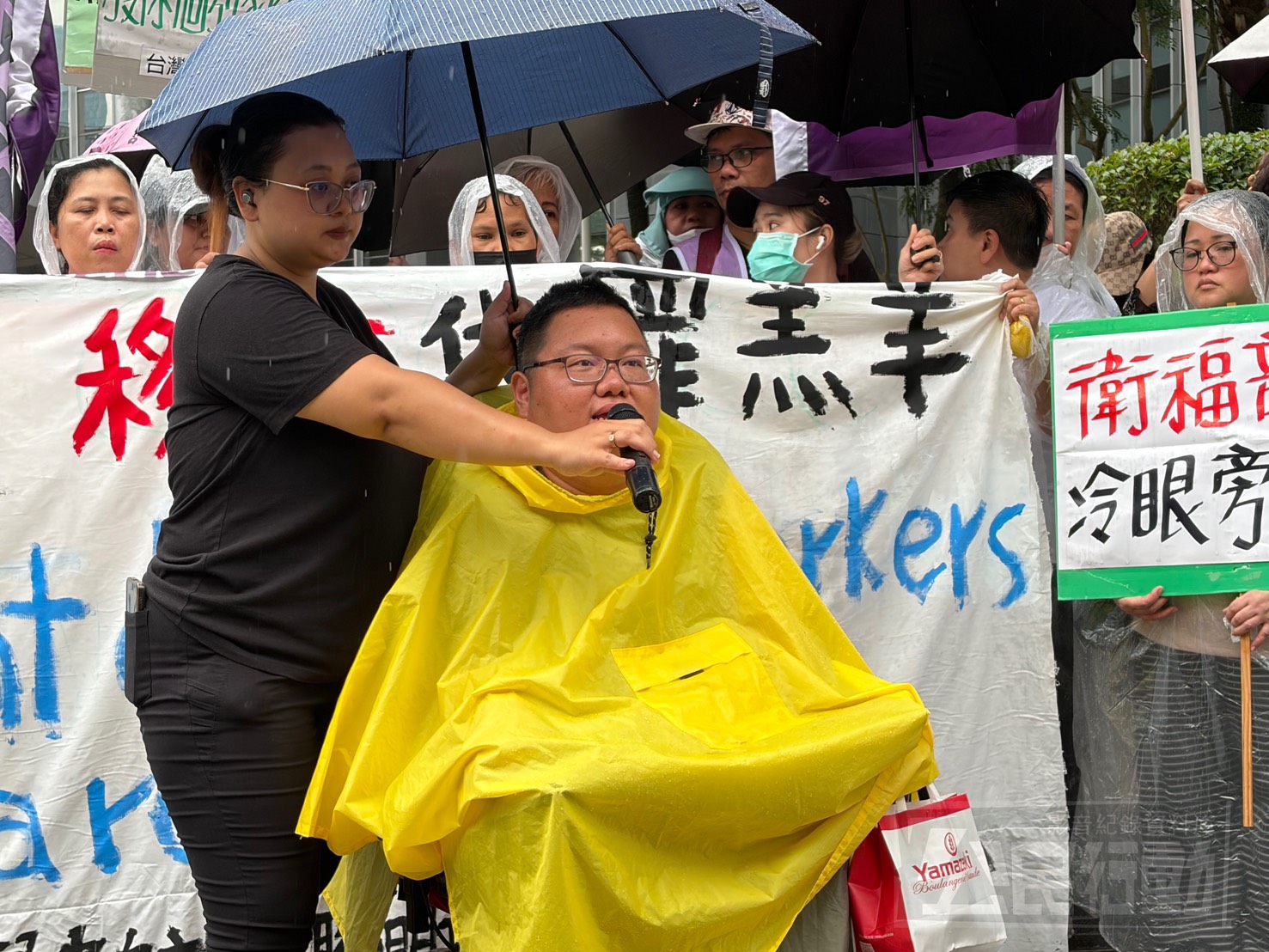
During the protest, groups staged a performance in the rain: migrant workers, elderly individuals, and people with disabilities were all bound together by a giant chain labeled “long-term care.” When workers tried to take a break, care recipients were left without support, illustrating a system where all parties are trapped and exhausted.
Advocates also criticized past policy attempts. A proposed Domestic Work Service Act in 2010 failed to pass. In 2018, the Ministry of Labor introduced “respite care,” but high eligibility thresholds and lack of nighttime services rendered it ineffective. Later, “diversified care services” also fell short due to high out-of-pocket costs. Activists argued that only by integrating migrant caregivers into the public long-term care system can this “chain” be truly broken.
24/7 Labor Conditions Raise Human Rights Concerns
Napia, representing SBIPT, stated that thousands of Indonesian migrant caregivers in Taiwan live with care recipients and provide round-the-clock services. They face unclear working hours, lack of rest, interrupted sleep, and insufficient health protections. Many suffer from severe fatigue, psychological stress, chronic illness, and hidden forms of exploitation within private households.
She added that migrant workers are often denied the right to return home to visit family, with such requests sometimes leading to contract termination. Access to medical care is also delayed because no one can replace them. Working 24 hours a day, seven days a week is not only inhumane but also compromises the quality of care provided. SBIPT therefore called for equal legal protections, humane working hours, and fair labor systems, emphasizing that institutional employment is key to ensuring basic labor rights.
Jogilyn from the Domestic Caretakers Union (DCU) emphasized that ahead of International Domestic Workers Day, migrant workers are calling for a fair, sustainable, and rights-based care system in Taiwan. The burden of long-term care has exceeded what any single worker can reasonably bear, while families struggle under insufficient public support. Care should be treated as a shared social responsibility, requiring stronger government commitment and better policy frameworks.
Jogilyn stressed that demands for rest days and leave are not privileges but basic labor rights. Ensuring workers’ dignity and protecting care quality are not conflicting goals—they must go hand in hand.
Struggles of Care Recipients Within an Inadequate System
Liu Yu-chi, Deputy Secretary-General of the Taiwan Association for Disability Rights and a person with spinal muscular atrophy (SMA), shared his experience. For over 20 years, he has relied on migrant caregivers to manage daily life, enabling him to study, work, and start a family.
However, when he sought to strengthen migrant workers’ rights at age 25, he found that hiring a caregiver imposed a heavy financial burden. When he asked MOHW whether public care services could supplement private care to allow workers time off, he was told he was ineligible because he already had a caregiver.
Ten years later, under Long-Term Care 2.0, families employing migrant caregivers became eligible for respite services—but not for independent living support. Liu found that respite care could not assist him in leaving home or participating in family activities, effectively confining care recipients indoors.
Only recently have policy adjustments allowed him to combine respite care with personal assistance services. However, personal assistant hours are restricted to times when migrant workers are on leave, requiring advance scheduling. This makes it nearly impossible for workers to take unexpected sick leave.
Liu urged the MOHW to align its policies with labor protections and incorporate migrant caregivers into institutional employment or independent living support systems. This would allow people with disabilities to maintain active social roles rather than being confined to the identity of “patients.”
Calls for Structural Reform
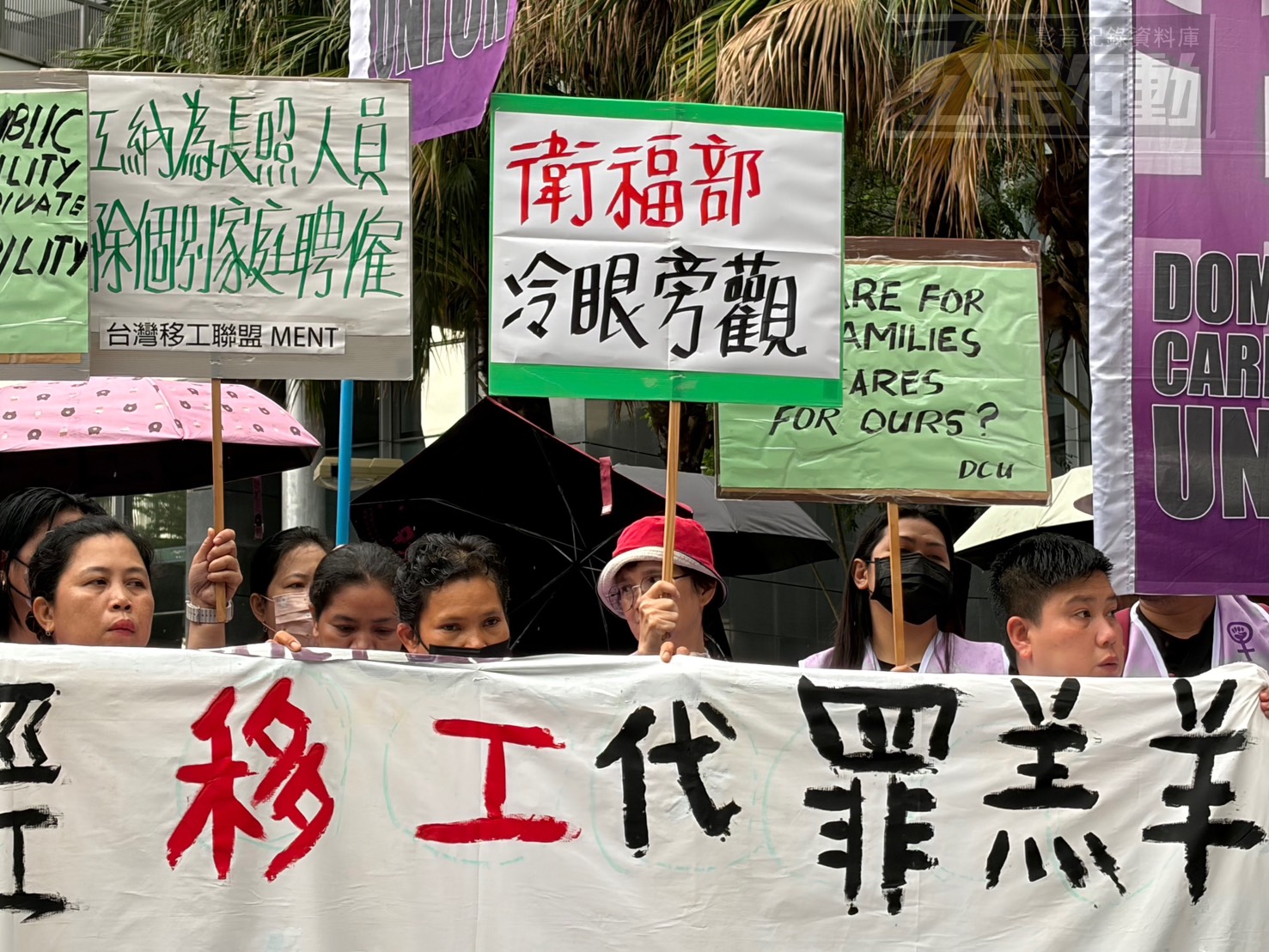
Shi Yi-xiang, a researcher at the Taiwan Association for Human Rights, noted that international review committees have repeatedly urged Taiwan to expand public long-term care services. Despite this, authorities have shown little action.
He criticized both the MOHW and the Ministry of Labor for failing to implement comprehensive reforms. Current measures—such as hotline improvements, employer inspections, and awareness campaigns—remain fragmented and fail to address the root issue of forced labor conditions.
MENT representative Wang Li-ting emphasized that Taiwan’s rapidly aging society has increased reliance on migrant workers while public care services remain insufficient. Society has come to depend on migrant labor instead of demanding accountability from the government.
She argued that no industry can expect workers to provide 24/7, year-round labor at low wages while maintaining high-quality service—and domestic care work is no exception. Integrating migrant workers into the public care system would create a more sustainable and equitable model.
MENT further proposed that care institutions should serve as employers, relieving families of employer responsibilities and allowing them to focus on providing emotional support. This would enable more flexible and professional care arrangements, distributing responsibility across multiple workers instead of placing it on a single individual.
At the end of the press conference, MOHW official Hsu Ju-mei accepted the petition, stating that the ministry had heard the concerns and would take them back for further discussion.
Wu Jing-ru responded that while this marked a small step forward, civil groups would continue to monitor the ministry’s actions closely. After decades of neglect, they vowed to keep pushing for meaningful reform.
[PNN / Reporter Yang Juan-ju]2026-06-15
[Photo by Reporter Yang Juan-ju]